
Heely'sWHO PUT A WHEEL IN
A SHOE?
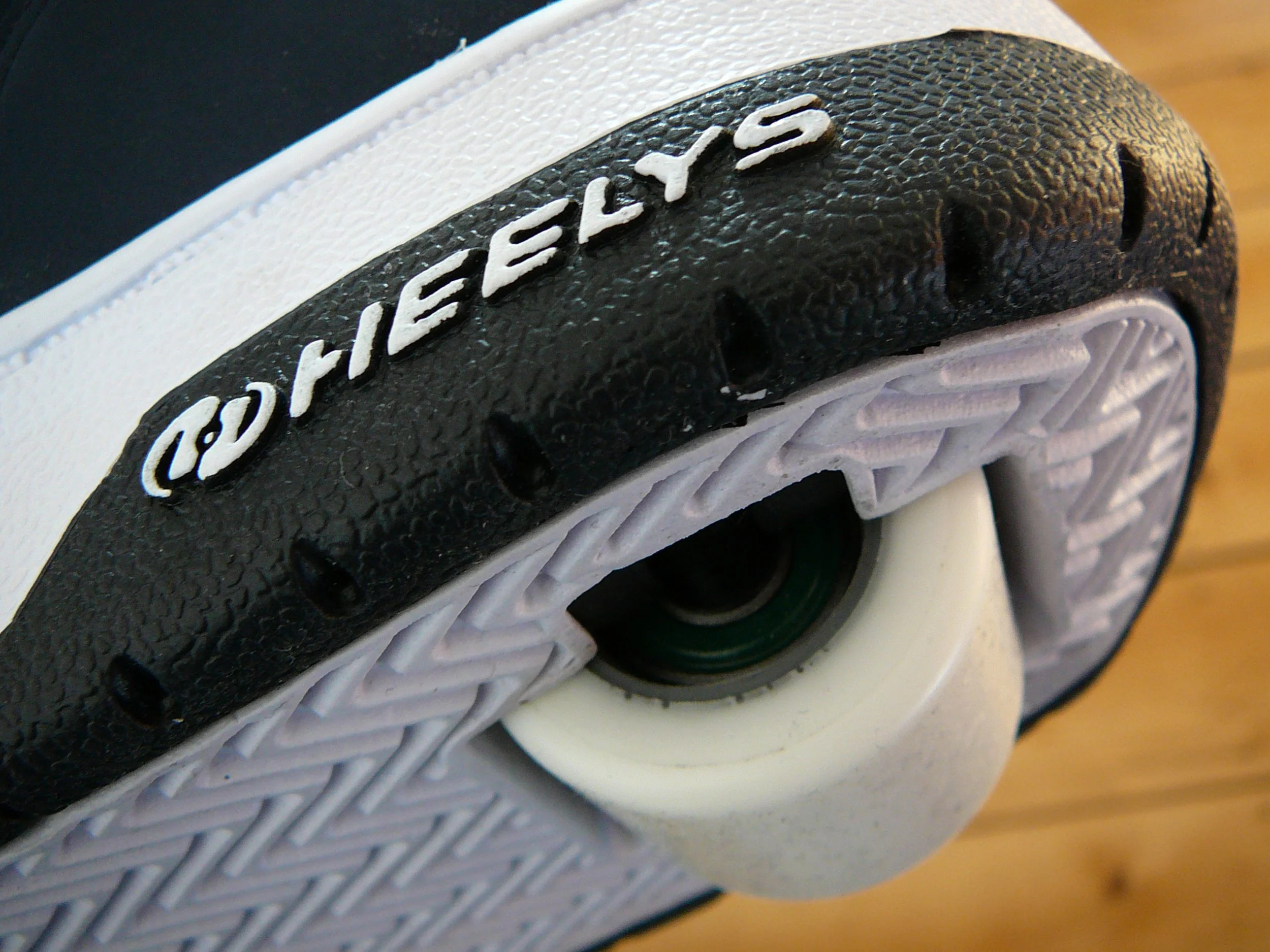
Someone, at some point, in a room somewhere, looked at a shoe and thought: what if it also moved? Not a skateboard. Not a scooter. Just a shoe. With a wheel in the heel. And then they made it, and then children were gliding through shopping centres with their arms slightly out and their faces arranged into expressions of concentrated nonchalance, and for a window of approximately three years this was considered a completely normal thing to witness. The person who had that idea has never been sufficiently thanked. This piece is, among other things, an attempt to address that.
Heelys had everything a craze is supposed to need. The product was complete. No assembly required, no subscription, no app. The concept was genuinely novel in a way that is increasingly difficult to achieve in a category as thoroughly examined as the shoe. The visibility was immediate and total. You could not miss someone Heelying past you, it was an event, it restructured the immediate environment simply by occurring. The joy was obvious and required no explanation. A child leaned back slightly and became, briefly, a different and more efficient category of person. By every available metric, this should have tipped.
It did not tip. It got close. Close enough to become a craze in the technical sense, close enough to be banned from several shopping centres which is arguably the highest honour available to a wheeled shoe, and then it plateaued, and then it faded, and the world moved on with the particular indifference it reserves for things that almost made it.
The reason, upon examination, is this: Heelying required something of you in public. Not a great deal, but enough. The lean. The glide. The arms. The acceptance, in real time, among people who were walking normally and had formed opinions about the situation, that you were doing this and had chosen to do this and were prepared to be seen doing this. You could not Heely privately. You could not Heely on a screen. You could not Heely in the direction of an audience that had opted in to watching you Heely. You simply had to lean back in a Tesco and commit, which is, it turns out, a social ask of a very specific and non-trivial magnitude.
And yet, the world that was not ready for Heelys was apparently extremely ready for looksmaxxing. This, for the uninitiated, is a craze built around the optimisation of your facial bone structure through jaw exercises, strategic lighting, and the meticulous documentation of your own inadequacy for an online audience that is also documenting its own inadequacy. This is a mainstream cultural phenomenon. Millions of people. Regular content. A vocabulary. A community. The craze tipped completely and has shown no signs of stopping, which raises a question about the actual mechanics of the tipping point because it is clearly not rationality and it is clearly not a lower bar of public commitment, because looksmaxxing requires an enormous amount of both.
The difference, which has been quietly assembling itself across this piece and will now be stated directly, is anxiety. Looksmaxxing is powered by the gap between how you look and how you want to look. A gap that, by design, cannot be fully closed, which means the engine never runs out of fuel. You can always looksmax more. There is always another optimisation available, another inadequacy to address, another version of your face that is slightly better than the current one. The anxiety is self-replenishing. It keeps people coming back. It keeps people invested. It keeps people performing.
Heelys had none of this. Heelys was just joyful. Straightforwardly, uncomplicatedly, completely. You put the wheel in the heel, you leaned back, it was good, and then it was done. The satisfaction was total and therefore terminal. Joy, it turns out, is a significantly weaker engine for cultural momentum than anxiety, because joy completes itself and anxiety does not, and the internet has a strong structural preference for things that do not complete themselves.
The wheel was in the shoe. The joy was right there, accessible and immediate and asking almost nothing of you except the willingness to glide past people in a shopping centre while they formed opinions. That was apparently too much and not enough simultaneously. The world needed something to be wrong first. The world needed a gap to close. Heelys, frustratingly, completely, offered nothing wrong at all.