
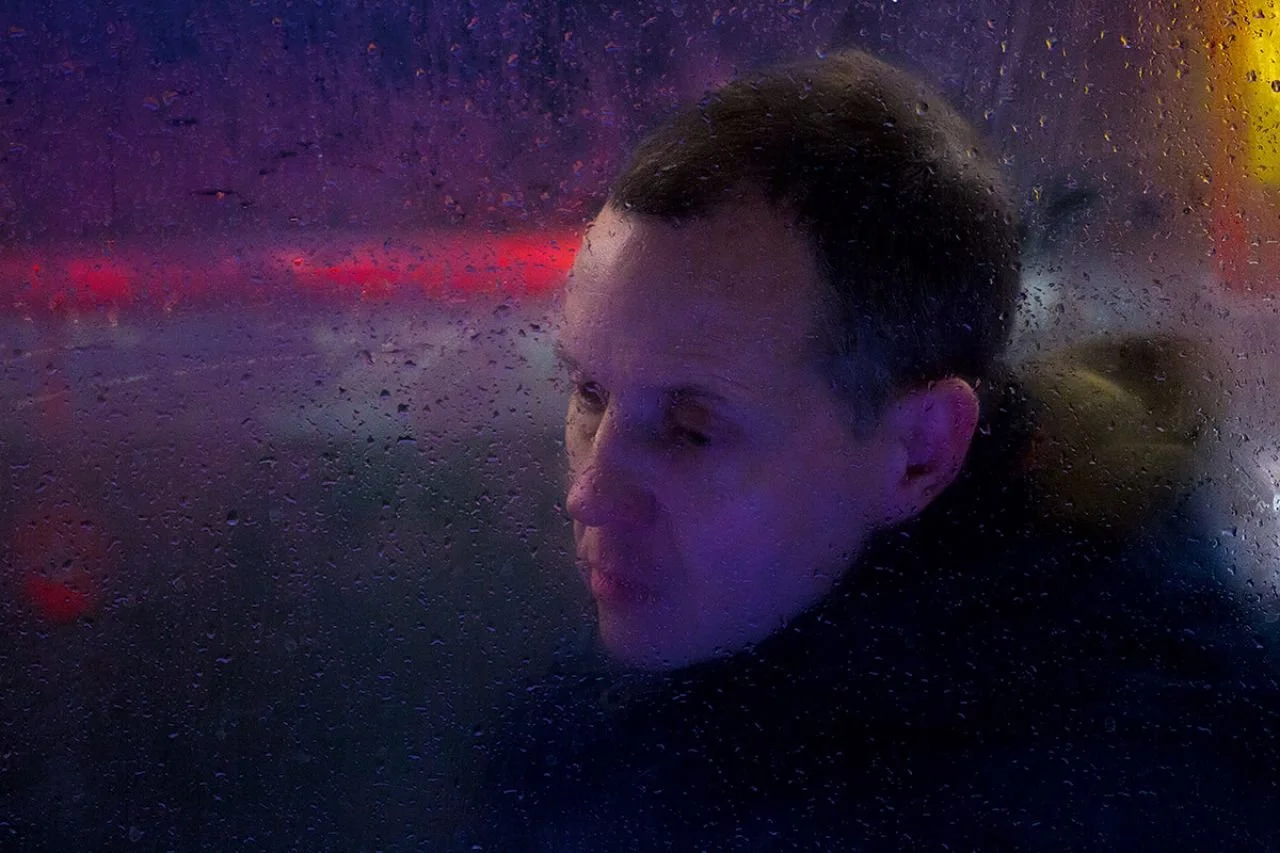
Nick Turpin
'On the Night Bus'
Nobody Told You Where to Sit. You Knew.
There is no seating plan on a bus. No usher, no allocation, no laminated chart fixed to the wall suggesting that perhaps you might consider row four. And yet, every morning, without discussion or instruction or any form of organised communication, several dozen people board a vehicle and distribute themselves across it with the quiet precision of a military operation that has been rehearsed many times. Nobody told you where to sit. You already knew. You have always known. The interesting question is how.
The front seats belong to a specific coalition. The elderly, with legitimate and uncontested claim. The anxious, who need to know exactly when their stop is arriving and cannot leave this to chance. And a third, more mysterious group, people who simply have somewhere to be and have decided, at a foundational level, that they will not be detained by the inefficiency of other people's exits. The front is not comfort. The front is logistics.
The middle is the great uncommitted. No strong feelings about entry, no strong feelings about exit, no particular agenda. The middle seats are chosen by people who thought about it briefly and then stopped thinking about it, which is either very healthy or a warning sign depending on your perspective. The middle is fine. Everything about the middle is fine.
The back is more complicated. Historically it belongs to teenagers performing a specific kind of autonomy, the back says I go where I want, I answer to no one, I have chosen to be here and I would like everyone to register this. In adulthood the back is occupied by two distinct types. People who genuinely don't care where they sit and the back was simply available. And people who very much want you to believe that. These are not the same person and the distinction matters enormously.
The aisle seat with the window free is a deliberate act. A message. The message is: I am here, this is my space, the negotiation required to access the window seat is a tax I am quietly imposing and I will not be apologising for it. Nobody who sits in the aisle seat with the window free is unaware of what they are doing.
Standing when seats are available. No notes. Genuinely baffling. Moving on.
Occasionally someone sits outside their section. A front seat person, recognisable by their posture and their relationship with time, found inexplicably in the back. A back seat person, loose and unbothered, somehow in row two. The bus does not acknowledge this. Nobody says anything. And yet something has shifted imperceptibly in the atmosphere of the vehicle, a minor disturbance in the social fabric, and at least three people have noticed and are quietly processing it. You can tell because they looked up from their phones.
I move between sections. Methodically, over time, in the manner of someone conducting research that nobody commissioned and nobody will ever read. The front is efficient and slightly stressful. The middle is fine, as previously established. The back has a different quality of light somehow, or perhaps just a different quality of person, which amounts to the same thing. I have sat in the aisle seat with the window free once, for research purposes, and I am not proud of it.
What nobody mentions, amid all of this careful positioning and studied indifference, is that a bus is essentially a living room. A long, narrow, moving living room shared between total strangers who have never met and will probably never meet again. The same four walls. The same quality of afternoon light. The same faint smell of someone else's lunch. And in this living room, by collective agreement, nobody knows each other. Eyes forward. Phones out. The mutual fiction of solitude maintained at considerable effort by everyone present.
The strange thing is that this fiction has an expiration date. If something happened, anything, a medical emergency, a confrontation, a sudden stop, every person on this bus would become a community within seconds. They would help without being asked. They would stay until things were resolved. They would exchange a look afterwards that contains everything the previous twenty minutes of deliberate non-acknowledgement did not. The social contract exists in full. It is simply filed somewhere nobody opens unless absolutely necessary.
Until then, the front stays at the front. The back stays at the back. The middle remains, as always, perfectly fine. And somewhere in the aisle seat, a person who knows exactly what they're doing stares at their phone, alone together with thirty strangers, in a living room that is moving through the city at forty kilometres an hour and not stopping until someone rings the bell.